Croatia has 1,246 islands. Split sits close to a cluster of the best ones — and within reach of two UNESCO-listed national parks and a Bosnian city with a bridge that survived the Ottoman Empire and a 1990s war. That’s a rare combination for a single base city. But not all five options are equal. Some eat your whole day in transit. One gets dangerously overcrowded in July. And a couple are so good that first-time visitors wish they’d booked them on day one.
Here are the five that hold up.
How These 5 Trips Compare at a Glance
| Destination | Travel Time (One Way) | Estimated Cost (Return, 2026) | Best For | Crowd Level in July/Aug |
|---|---|---|---|---|
| Hvar Town | ~50 min (catamaran) | €18–24 return ferry | Beach, old town, views | Very high |
| Krka National Park | ~1.5 hrs (bus + shuttle) | €5–8 bus + €26 entry | Waterfalls, swimming | High |
| Plitvice Lakes | ~2.5 hrs (bus) | €15–20 bus + €35–40 entry | Dramatic scenery, photography | Extremely high |
| Mostar, Bosnia | ~2.5 hrs (bus) | €10–16 one way | History, architecture, food | Moderate |
| Brač Island (Zlatni Rat) | ~50 min ferry + 55 min bus | €10–12 return + local bus | The famous beach | High |
Ferry fares come from Jadrolinija, Croatia’s main ferry operator. National park entry fees vary by season — Plitvice charges more in July and August and requires advance online booking. Bus prices are approximate and vary by operator.
Hvar Island — The Best All-Around Day Trip from Split
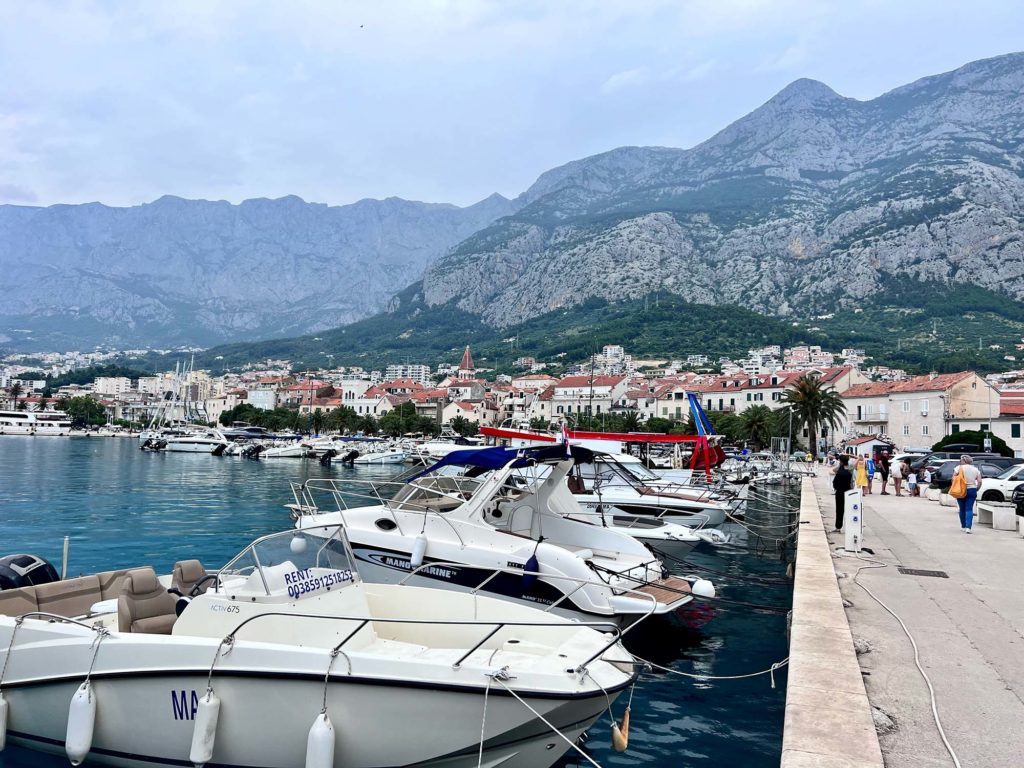
Hvar punches above its weight. It’s one island with a medieval walled town, lavender fields in the interior, crystal-clear Adriatic coves, and a nightlife strip that draws crowds from across Europe. As a day trip, it’s the most complete option on this list — and the most forgiving for first-timers who don’t want to plan too much in advance.
Getting There
Take the Jadrolinija catamaran from Split’s Riva waterfront directly to Hvar Town. Journey time is around 50 minutes. Summer departures start around 8:00–9:00 AM, with return boats running into the evening. A one-way passenger ticket costs roughly €9–12. Book at the Split ferry terminal or online through the Jadrolinija website — peak summer dates do sell out, so don’t leave it to the morning of.
There’s also a car ferry from Split to Stari Grad on the opposite end of the island, running about 2 hours. If you’re traveling without a car, the catamaran to Hvar Town is the right call.
What to Actually Do
Hvar Town’s main square — Pjaca — is one of the largest in Dalmatia and worth pausing at before the crowds arrive. The fortress above town, Tvrđava Fortica (€1 entry), has a panoramic view over the Pakleni Islands that’s worth the ten-minute climb. For swimming, skip the town harbor and take a water taxi from the Riva to the Pakleni Islands — €5 each way, ten minutes. Stipanska and Zdrilca are the best spots.
Food tip: restaurants directly on the harbor are overpriced and coasting on location. Walk two streets back into the old town. Giaxa does excellent pasta and local fish at much fairer prices. Any konoba tucked away from the main square will serve better food than the tourist-facing spots on the water.
The Honest Trade-Off
August on Hvar Town’s harbor strip can feel like a music festival that forgot to book any music. The boat-party crowd is loud and real. If that’s not your scene, go in June or early September — the island is dramatically more enjoyable. In peak summer, get the early catamaran, see the main sites before noon, and leave by early evening before the nightlife crowd thickens. The island itself is beautiful. It’s the specific 200-metre strip of harbor bars that gets exhausting.
Still the best single day trip from Split for most travelers. The ferry logistics are simple, the sights cover a lot of ground, and you don’t need a car to see everything worth seeing.
Krka or Plitvice — You Only Need One
Both parks have cascading waterfalls, wooden walkways, and crowds in July. Pick based on what you actually want, not which one sounds more impressive.
Choose Krka if you want to swim near the falls (you can, at Skradinski Buk), if you want to keep the day shorter (1.5 hrs from Split vs. 2.5 hrs), or if you’re traveling in peak summer and want to avoid Plitvice’s overwhelming visitor numbers. Krka entry is around €26 per adult in 2026. Bus from Split to Šibenik costs €5–8, then a short park shuttle or local bus gets you to the entrance.
Choose Plitvice if dramatic multi-level lake scenery and photography are the main reasons you came to Croatia. It’s a UNESCO World Heritage Site and genuinely extraordinary — but the peak-season crowds are among the worst in Europe. Entry runs €35–40 and must be booked in advance at np-plitvicka-jezera.hr. The return bus from Split costs €15–20 and takes 2.5–3 hours.
Clear pick for a day trip from Split: Krka. Closer, cheaper, and you can actually swim in it. Save Plitvice for a separate trip where you’re staying overnight and can walk the trails before 9 AM.
Why Mostar Is the Most Overlooked Trip on This List
Most travelers don’t think about crossing an international border on a day trip. They should. Mostar sits 2.5 hours from Split by bus, costs roughly €10–16 one way with operators like FlixBus or Autoprevoz Mostar, and puts you in a completely different world from the Dalmatian coast.
The Stari Most — the Old Bridge, rebuilt after its destruction in the 1993 siege — is one of the most striking pieces of architecture in the Balkans. The old bazaar, Kujundžiluk, is genuinely atmospheric rather than just postcard-pretty. The food is different too: ćevapi, burek, Bosnian coffee thick enough to stand a spoon in. Lunch for two at a local restaurant runs €10–15 total.
What Makes It Worth the Distance
The cultural contrast is the whole point. You go from Mediterranean coast culture to Ottoman-influenced Bosnia in the same afternoon. Mosque minarets, cobblestones, copper-work craft shops — it doesn’t feel like a longer version of the coast. It feels like a different country. Because it is.
Mostar also runs cooler in August compared to Croatia’s coastal hotspots. That alone makes it more comfortable for anyone who’s already spent a day fighting crowds at Hvar or Plitvice.
What to Know Before You Go
You need a passport. Bosnia is outside the EU and Schengen, so a border crossing applies. It’s usually fast — five to ten minutes. Several Split-based tour operators run guided day trips to Mostar for €40–60 per person, including transport, a local guide, and usually a stop at Kravice Waterfalls on the return leg. The waterfalls are beautiful and add almost nothing to the overall travel time. If you’re comfortable navigating independently, the bus is fine. If you’d rather have context for what you’re seeing, the guided option earns its price.
Brač Island and Zlatni Rat Beach — Is It Worth the Effort?
Zlatni Rat (Golden Cape) near Bol has been called one of Europe’s best beaches. The label is earned. The pebble-and-sand spit juts into the Adriatic and actually shifts shape with tidal currents — which is rare enough that people visit just to watch it happen. But as a day trip, it requires more logistics than the other options here.
Is It Worth a Full Day Trip?
Only if the beach is genuinely the point. The Jadrolinija car ferry from Split to Supetar takes 50 minutes (passenger ticket €5–6, no car needed), then a local Brač bus from Supetar to Bol takes another 55 minutes. That’s nearly two hours each way. Fine if Zlatni Rat is specifically on your itinerary, but too much commitment if you just want a good beach near Split.
Simpler alternatives exist. The beaches near Omiš are 30 minutes from Split by bus (€3–4 return), and the town itself sits at the mouth of the Cetina River gorge with its own appeal. The Kaštela Riviera north of Split has calm, swimmable water with almost no transit time. For a pure beach day without the ferry logistics, either beats a Brač round trip.
If You Do Go to Zlatni Rat
Rent a bike or scooter in Bol — €10–15 for a bike, €30–50 for a scooter — and ride the coastal path before hitting the beach. Arrive before 10 AM in July to secure a decent spot. The windsurfing at Zlatni Rat is some of the best in the Adriatic; Big Blue Sport in Bol offers beginner sessions from around €50 and rents full equipment. The beach is free. Everything around it costs money but is worth budgeting for if watersports are on your list.
How to Reach All Five Without a Car
- Hvar Town: Jadrolinija catamaran from Split Riva waterfront. Buy tickets at the terminal or on the Jadrolinija website. No car needed — just show up on foot.
- Krka National Park: Bus from Split bus station to Šibenik (runs hourly, ~1.5 hrs, €5–8). From Šibenik, take the park shuttle or local bus to the Skradinski Buk entrance. Total journey under 2 hours door-to-entrance.
- Plitvice Lakes: Several operators run buses from Split toward Zagreb with a stop at Plitvice (Entrance 1 or 2). Journey is 2.5–3 hrs, return bus costs €15–20. Book your park entry at np-plitvicka-jezera.hr before you leave Split — do not assume walk-up tickets are available.
- Mostar: FlixBus or Autoprevoz Mostar depart from Split bus station. Journey ~2.5 hrs. Bring your passport. The border crossing is routine but skipping your ID is not an option.
- Brač (Zlatni Rat): Jadrolinija car ferry Split to Supetar for the passenger ticket only (no car required). Then local Brač line bus from Supetar to Bol.
Split’s Autobusni kolodvor (bus station) sits adjacent to the ferry terminal on Domovinskog rata — both within a 15-minute walk of the old town. The Getbybus platform lets you compare and book most Croatian and regional bus routes in one place, which is useful for planning Mostar or Plitvice connections in advance.
The Mistakes That Ruin Day Trips from Split
Do you need to book Plitvice tickets before arriving?
Yes, always — and well in advance. Plitvice enforces a daily visitor cap. In July and August, tickets sell out weeks ahead. Arriving without a booking means a 3-hour bus ride for nothing. Book directly at np-plitvicka-jezera.hr. Third-party resellers exist but charge a markup with no added benefit.
Is August too crowded for these trips?
August is the peak of peak season across Dalmatia. Hvar’s harbor becomes a wall-to-wall crowd by afternoon. Plitvice’s boardwalks turn into slow-moving queues. Zlatni Rat disappears under beach umbrellas by 11 AM. None of this makes the trips impossible, but the fix is simple: take the first ferry or bus of the day (7–9 AM), see the main sights before noon, and head back before 4 PM. Mostar handles August crowds better than the coastal options and is the most relaxed choice if you’re traveling in peak summer.
Can you combine two day trips in one day?
One combination works: Krka plus a quick stop in Trogir on the return. Trogir is 30 minutes from Split by bus (€2–3), a UNESCO-listed medieval town, and easy to walk in under two hours. Every other combination on this list is overambitious. Plitvice plus anything else means you’ll spend the whole day rushing. Hvar plus Brač involves two separate ferry schedules that can cascade badly if one boat runs late. Do one thing properly.
For a first-time visitor with only one day trip available: choose Hvar. The ferry is simple, the old town is beautiful, the swimming is excellent, and you’ll have enough time to do all three comfortably. If you’ve already done the Croatian coast and want something genuinely different — Mostar is the most memorable trip on this list, and it’s not particularly close.