I sat down at a famous pizzeria in Rome, ordered a Margherita, and got a thin, cracker-crisp disc that barely held the sauce. I was furious. I’d just come from Naples, where the same pizza was a pillowy, charred cloud that folded like a book. Two cities, two completely different foods, same name. That confusion costs travelers time and money — and it’s the reason this article exists.
Why These Two Pizzas Are Not the Same Dish
Naples and Rome are only 140 miles apart, but their pizza traditions split generations ago. The difference isn’t subtle — it’s structural.
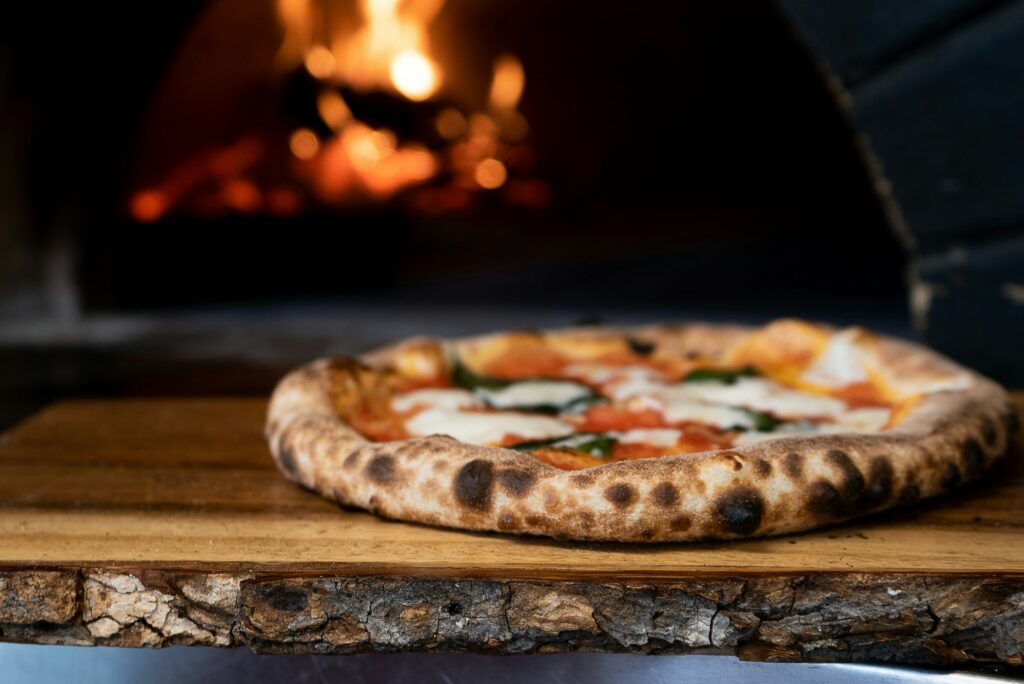
Pizza Napoletana is a protected product under EU law. The dough must be made with tipo 0 or tipo 00 flour, San Marzano tomatoes, fresh mozzarella di bufala or fior di latte, basil, and extra-virgin olive oil. It’s cooked in a wood-fired oven at 485°C (905°F) for 60–90 seconds. The result: a soft, elastic crust with a raised, puffy cornicione (the outer edge) that’s spotted with leopard-print char.
Pizza Romana has no such legal protection. The dough uses a different hydration level — lower, around 55–60% compared to Naples’ 60–65% — and often includes a bit of oil in the mix. It’s stretched thinner, sometimes with a rolling pin (a sin in Naples), and baked longer at a lower temperature. The crust stays flat, crunchy, and almost biscuit-like.
One key spec: a proper Neapolitan pizza must be no more than 35cm in diameter with a cornicione height of 1–2cm. Roman pizza is often larger (40cm+) with no raised edge to speak of. That’s not opinion — that’s the Associazione Verace Pizza Napoletana (AVPN) regulation.
What This Means When You Order
If you walk into a Roman pizzeria and ask for a “classic Margherita,” you’ll get a thin, crunchy base. If that’s not what you want, you’ll be disappointed. The solution: know which city you’re in and order accordingly. In Naples, look for the AVPN certification sticker in the window. In Rome, ask for pizza al taglio (by the slice) if you want something closer to Neapolitan softness in a different format.
How to Spot a Good Neapolitan Pizza (Before You Bite)
I’ve eaten at 40+ pizzerias in Naples over the last decade. Here’s what separates the ones worth your €8 from the tourist traps.
The cornicione should be soft, not hard. Press the edge with your finger. If it springs back, it’s good. If it cracks or feels like bread crust, the dough was overworked or baked too long. A proper Neapolitan crust should have a thin, crispy exterior and an airy, chewy interior — like a good sourdough crumb.
The center should be wet. Not soggy, but visibly moist. The AVPN standard says the center must be no more than 0.5cm thick, and the sauce should pool slightly. If the center looks dry or the cheese is fully set, the oven was too cool or the pizza sat too long.
Look for leopard spots. The bottom of the pizza should have irregular dark brown and black marks from the wood fire. A uniform pale bottom means it was baked in an electric oven. There’s nothing wrong with electric ovens — some excellent pizzerias use them — but a wood-fired pizza will have that specific flavor from the smoke.
The Three Pizzerias I Trust in Naples
- L’Antica Pizzeria da Michele (Via Cesare Sersale, 1) — €6 for a Margherita. Only two pizzas on the menu. No reservations. Expect a 45-minute wait. Worth every second.
- Pizzeria Starita a Materdei (Via Materdei, 27) — €8.50 for the Montanara (fried pizza dough, then baked). A completely different experience but equally essential.
- 50 Kalò di Ciro Salvo (Piazza Sannazaro, 201) — €9 for the Margherita. Higher hydration dough (68%) gives an almost custard-like interior. My personal favorite for texture.
Roman Pizza: The Two Styles You Need to Know
Rome doesn’t have one pizza — it has two, and confusing them will lead to ordering the wrong thing.
Pizza al Taglio (pizza by the slice) is baked in large rectangular trays, then cut with scissors and sold by weight. The dough is thicker than Neapolitan but lighter than a typical American slice. It’s often topped after baking with fresh ingredients — arugula, prosciutto, shaved parmesan — so the base stays crisp. You pay by the gram: expect €2.50–€4 per slice depending on toppings. This is what Romans eat for lunch.
Pizza Tonda Romana is the round, thin-crust pizza served in sit-down restaurants. This is the one that made me angry when I first arrived. It’s not bad — it’s just different. The dough is rolled thin, sometimes par-baked, then topped and finished in the oven. The crust crunches when you bite it. Toppings are often more varied than Naples: you’ll see eggs, truffle oil, smoked salmon, and even pineapple (yes, in Rome).
Where to Eat Both in Rome
| Pizzeria | Style | Price | Must-Order |
|---|---|---|---|
| Pizzarium (Via della Meloria, 43) | Pizza al Taglio | €3–5 per slice | Potato and rosemary — sounds plain, tastes incredible |
| Bonci (Via Trionfale, 36) | Pizza al Taglio | €3–6 per slice | Seasonal vegetable toppings; the squash blossom in summer |
| Da Remo (Via Santa Maria Maggiore, 8) | Pizza Tonda Romana | €8–12 for a whole pizza | Margherita with bufala — the cheese makes the thin crust work |
| Emma Pizzeria (Via Monte della Farina, 28) | Pizza Tonda Romana | €9–15 for a whole pizza | Pizza with guanciale and pecorino — Roman through and through |
The One Mistake Almost Every Tourist Makes
I see it every day. A tourist walks into a Roman pizzeria at 7:30 PM, sits down, and asks for a whole pizza Margherita. The waiter brings it. They eat it. They leave thinking Roman pizza is overrated.
The mistake: ordering a round pizza in Rome when you should order al taglio. Pizza Tonda Romana is a dinner dish, eaten at 8:30 PM or later. Pizza al Taglio is a lunch food, eaten between 12:30 and 3:00 PM. If you’re hungry at 1 PM and you sit down for a round pizza, you’re eating a meal that Romans wouldn’t touch at that hour.
Worse: many tourist-oriented pizzerias serve par-baked, frozen round pizzas that they finish in a gas oven. The crust is cardboard. The sauce is sweet. You paid €12 for something Domino’s wouldn’t serve.
How to avoid this: At lunch, find a pizzeria al taglio. Point at the slices you want. They’ll weigh them, heat them, and you’ll eat standing at a counter or on a bench. At dinner, skip the al taglio spots — they close at 3 PM — and go to a sit-down restaurant that specializes in tonda. Ask the waiter: “È pizza tonda romana, vero?” If they hesitate, leave.
When You Should Skip Neapolitan Pizza Entirely
This might get me uninvited from dinner parties, but here it is: Neapolitan pizza is not always the best choice.
If you’re eating outside Italy, skip the Neapolitan. The dough requires specific flour (Caputo Nuvola or equivalent), high-hydration technique, and a wood-fired oven that hits 485°C. Most pizzerias outside Naples and a few cities in Campania can’t replicate it. You’ll get a soggy center, a doughy crust, and disappointment. I’ve had worse Neapolitan-style pizza in New York than I have in Rome.
If you want toppings, go Roman. Neapolitan pizza is minimalist by design — three or four ingredients max. The wet center can’t support heavy toppings without collapsing. Roman pizza, with its dry, sturdy base, can handle mushrooms, sausage, eggs, multiple cheeses. If you’re the type who wants a loaded pizza, Neapolitan will frustrate you.
If you’re in a hurry, skip both and get pizza al taglio. A whole Neapolitan pizza takes 90 seconds to bake but you’ll wait 30 minutes for a table. A whole Roman pizza takes 15 minutes to bake. A slice of al taglio takes 2 minutes. For a quick lunch, al taglio wins every time.
How to Order Pizza in Italian (Without Looking Like a Tourist)
I’ve watched travelers stumble through this for years. Here’s the script.
At a Neapolitan pizzeria:
- Say: “Una Margherita per me, per favore.”
- Do NOT ask for pepperoni. That’s not a thing in Italy. You’ll get bell peppers.
- Do NOT ask for a knife and fork. Neapolitans fold the pizza and eat it with their hands. The cornicione acts as a handle.
- Do NOT ask for extra cheese. The ratio is deliberate. More cheese = soggy pizza.
At a Roman pizzeria al taglio:
- Say: “Vorrei due pezzi di pizza, per favore.” (I’d like two pieces.)
- Point at the slices you want. They’ll ask “Questi?” and you nod.
- They’ll weigh them and tell you the price. Pay, then they heat it.
- Eat it standing. There are no seats at most al taglio places.
At a Roman tonda restaurant:
- Say: “Una pizza margherita con bufala.”
- If you want it cut into slices for sharing, say “Tagliata, per favore.”
- Expect it to arrive whole. Cut it yourself.
The Verdict: Which Pizza Should You Eat and Where
Here’s the shortest possible answer.
For the classic experience: Eat Neapolitan pizza in Naples. Go to L’Antica Pizzeria da Michele. Order the Margherita. Eat it with your hands. Don’t overthink it.
For the best lunch in Rome: Go to Pizzarium. Order two slices — the potato and rosemary and whatever seasonal vegetable they have. Eat it standing on the sidewalk. Spend €5.
For the best dinner in Rome: Go to Da Remo. Order the Margherita con bufala. Drink a €4 glass of house wine. The crust will crack when you bite it. That’s not a flaw — that’s Roman pizza.
Naples and Rome both make excellent pizza. They just make different things. Stop expecting one to be the other, and you’ll enjoy both.